Loading progress...
Destination Finder
Session Objectives
Session Objectives – Destination Finder
By the end of this session, you will:
Understand how imagining your future destination strengthens the real transformation you are working toward.
Learn how to describe your current retirement journey and connect it with your desired retirement destination along a realistic timeline.
Use insights from your imagined journey and destination to identify steps you can take now.
Treat your journey and destination as a work in progress that can be revisited and evolved as your retirement transformation unfolds.
Destination Finder
Transformation
Finding Your
Destination
Destination Finder – Participant Activity
Follow the steps below exactly as outlined in the Destination Finder, applying each one to your retirement transformation. Refer back to the case studies if needed.
This activity works best when you give each step real time and genuine reflection. Don’t rush. The more you invest, the more you will get from the process.
exploreSteps 1, 2 & 3
Destination Finder
1
2
3
Steps 4 & 5
”Speak as if your desired future were a reality: ‘This is who I am, this is what I am doing, and this is the life I am living.‘“
Destination Finder
4
5
Steps 6 & 7
Destination Finder
6
7
“What did your future self’s vision reveal about who you are becoming or wish to become in retirement?”
What Did You Discover?
Reflect on what the Destination Finder revealed about your transformation.
What your destination revealed
about your transformation
What did your future self’s vision reveal about who you are becoming or wish to become in retirement?
Which parts of your imagined destination felt most believable or emotionally convincing?
What assumptions about your retirement journey changed once you saw your destination clearly?
What you learned about your
mind/body system
How did your imagination respond when you permitted it to project you into the future?
What did you notice about the clarity or vividness of your multisensory imagery?
How did it feel to speak as your future self rather than about your future self?
“Which steps, turning points, or decisions stood out most when you travelled backwards through your journey?”
What Did You Discover?
Reflect on your timeline and what you saw when looking back from the future.
What you realised about
your timeline
What did your chosen timeframe reveal about your pace, expectations, and readiness?
Did your imagined journey suggest a slower or faster timeline than you expected?
What became clearer about the stages your transformation will likely pass through?
What you saw when looking
back from the future
Which steps, turning points, or decisions stood out most when you travelled backwards through your journey?
What did you notice about the order of these steps, and what does that order tell you about what comes first?
Which parts of the journey felt surprisingly straightforward once you imagined them happening?
“What beliefs or concerns softened once you realised your destination has a path leading to it?”
What Did You Discover?
Reflect on what your imagined journey revealed and what changed when you returned to the present.
What your imagined journey revealed
about your real one
What parallels did you notice between your imagined steps and the actions available to you now?
Which elements of your destination already exist in early form in your current life?
Which stages of the journey might require support, new skills, or changes in routine?
What changed when you returned
to the present
What insights or understandings were most striking once you came back to the “now”?
What immediate actions became apparent as a result of the exercise?
What beliefs or concerns softened once you realised your destination has a path leading to it?
“How does seeing your destination first change the way you view your next steps?”
How This Reframes Your Transformation
Reflect on how your perspective shifts once you see your destination clearly.
Your Next Steps
How does seeing your destination first change the way you view your next steps?
What will you do differently now that the journey feels more recognisable?
Maintaining Momentum
How will you use future repetitions of the Destination Finder to maintain momentum?
Treat your journey and destination as a work in progress. Revisit and evolve it as your retirement transformation unfolds.
Case Study 01
Andrea
Andrea – From Uncertain Identity to Confident Creative
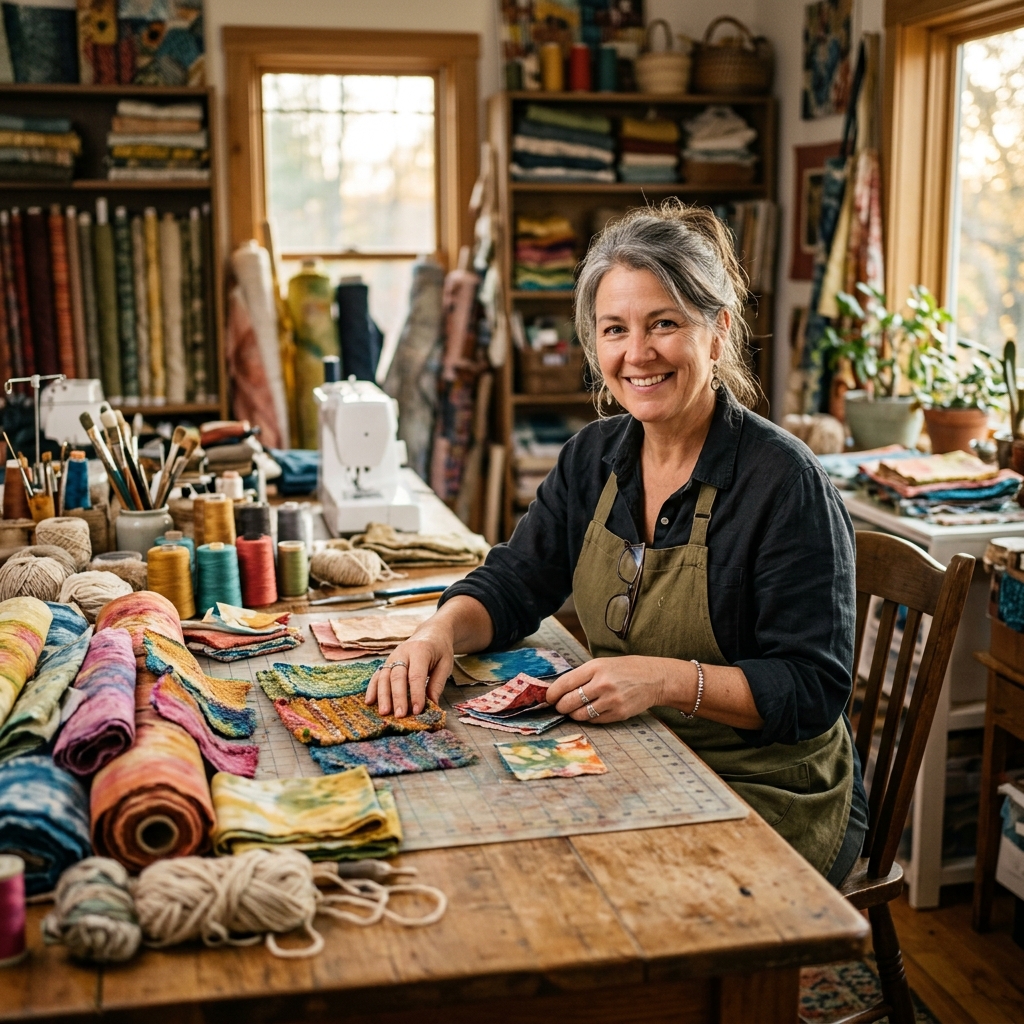
Andrea had recently retired and was enjoying the freedom of unstructured days, drifting toward creative tasks without committing to anything specific yet. Her destination showed her working at a long table in a small home studio, preparing textile pieces for a local makers’ fair — known as “someone who makes things,” not “a retired accountant.” She set her timeline at eighteen months.
She pictured colours spread across the table, the sound of fabric scissors, the feel of textured materials, the smell of warm dye, the satisfaction of pieces laid out ready for display.
”To get to this stage, I took a single evening class.” “To get to that stage, I bought second-hand equipment and created a small collection.” “To reach this point, I applied to one makers’ fair to test my work.”
Andrea realised she didn’t need certainty, only the first step — the evening class. She repeats the exercise every three months to refine her creative direction.
Case Study 02
Mohammad
Mohammad – Reimagining Physical Health and Mobility
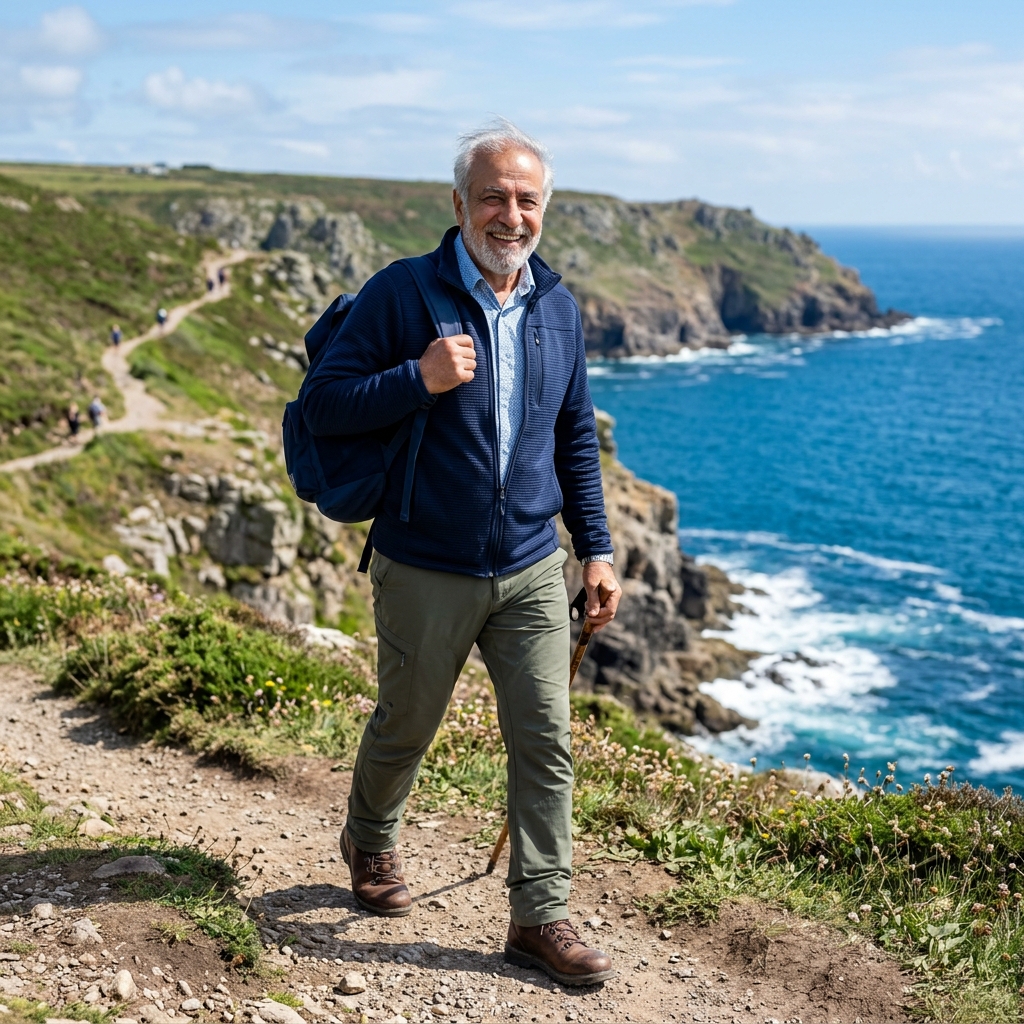
Mohammad’s retirement was steady and relaxed. He enjoyed quiet mornings, regular routines, and short neighbourhood walks — not aiming for athletic goals, just a life that felt physically comfortable and active enough. His destination showed him walking a steady coastal path, upright, relaxed, and strong. One year felt realistic.
He imagined the sound of the sea, the rhythm of his breathing, the strength in his legs, and the calm that came from moving without strain.
”To reach this stage, I began with a physiotherapy assessment.” “To get to that stage, I walked for ten minutes a day.” “To reach this point, I joined a low-impact walking group when I felt ready.”
He realised he wasn’t unfit, he was ‘deconditioned’. The path forward was gradual, not heroic. He repeats the Destination Finder every six weeks to recalibrate pace.

Case Study 03
Janet
Janet – A Professional Identity Without the Pressure
Janet had settled into retirement smoothly. She enjoyed having control over her diary and spent time reading, walking, and catching up informally with old colleagues. Her destination showed her at her kitchen table running a small online session for community groups — conversational, light, and impactful. She set her timeline at nine months.
She imagined the glow of the laptop screen, a notebook with ideas, friendly faces on video calls, and the calm of being in her own home.
”To reach this stage, I clarified my niche.” “To get here, I reconnected with trusted colleagues.” “To reach this point, I offered one pro-bono session before taking on paid work.”
She recognised she still wanted purpose, just not pressure. She revisits the process at the end of each term to adjust her workload.
Case Study 04
Tom
Tom – Rekindling Curiosity Through Photography
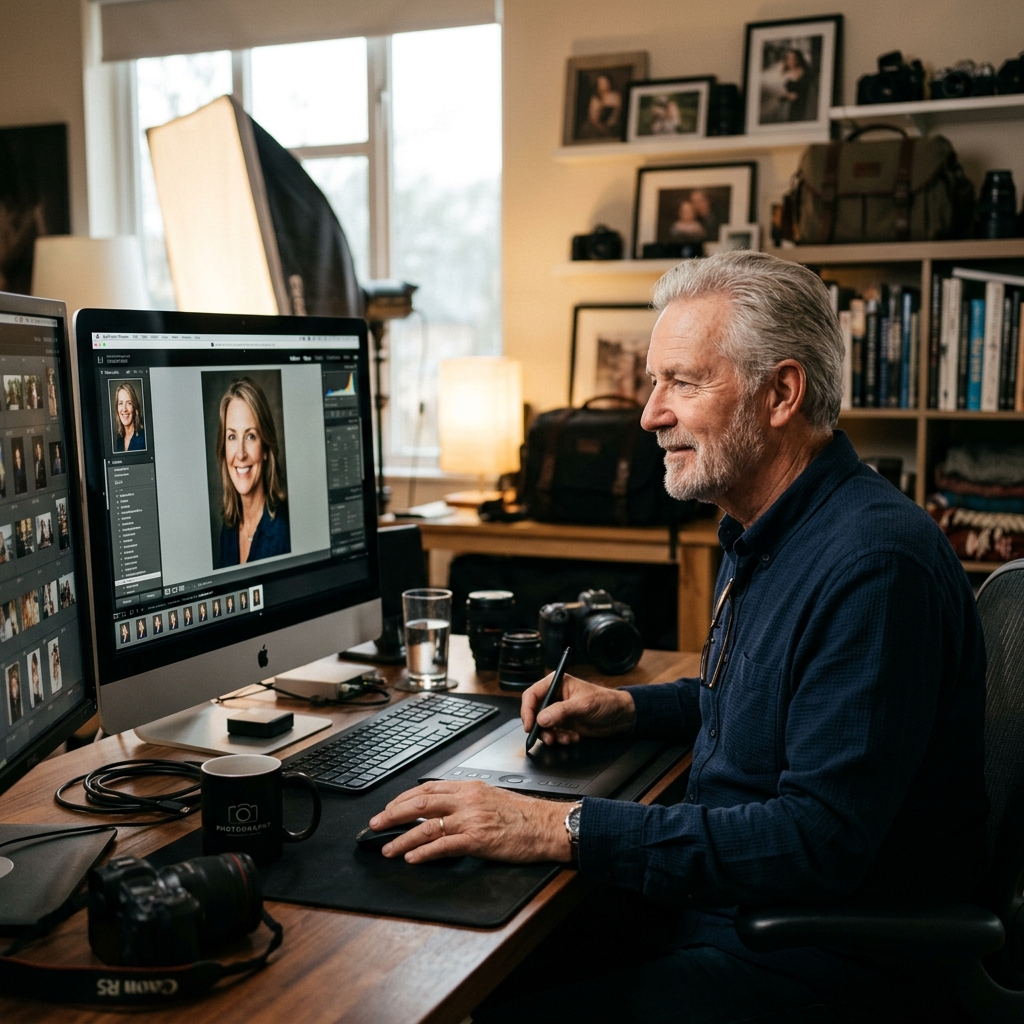
Tom’s early retirement gave him plenty of space. He stayed active, saw friends, and worked on household projects. He sensed there was room for a new interest, but he wasn’t rushing to find one. His destination showed him in a calm home studio editing portraits of people from his town — a blend of craft and community. He set his timeline at twelve months.
He pictured the soft light of the studio, the sound of the shutter, the details of people’s faces, and the satisfaction of capturing something honest.
”To get here, I dusted off my old camera.” “To reach this stage, I completed a short online course.” “To arrive here, I applied for a small local arts grant.”
He realised the project didn’t need to be big so long as it was real. He uses the Destination Finder to choose each new project theme.

Case Study 05
Yvonne
Yvonne – A Social Destination Built on Connection
Yvonne enjoyed the calm and flexibility of retirement. Her days were comfortable and predictable, with time for walks, reading, and local errands. She sensed she might want more connection, but she was in no hurry. Her destination showed her hosting a small monthly supper club at home — conversation, warmth, and the steady rhythm of a shared table. She set her timeline at six months.
She imagined the warmth of the kitchen, the clinking of glasses, the low hum of conversation, and the feeling of her home becoming a gathering place.
”To get here, I invited two friends for a simple meal.” “To reach this stage, I chose one fixed date each month.” “To arrive here, I gradually widened the guest list.”
She realised she didn’t need a perfect home, just a consistent invitation. She repeats the exercise before each new season to evolve the format.

Case Study 06
Eleanor
Eleanor – A Life That Includes Regular Foreign Travel
Eleanor enjoyed the steady rhythm of retirement — morning walks, time with neighbours, and regular video calls with her adult children. The idea of exploring Europe had begun to surface more often. Her destination showed her sitting on a shaded balcony in southern Europe, studying a local map before setting out for a day of slow exploration. She didn’t look like a tourist. She looked at home. She gave herself two years to grow into this version of herself.
She imagined the warmth of the early sun, distant conversations drifting up from the street, the texture of the map beneath her hands, the taste of coffee, and the calm confidence of knowing exactly how to navigate her surroundings.
”To get to this stage, I booked a three-day solo trip to a nearby European city.” “To reach this point, I completed a short language course.” “To get here, I practised airport and transport routines until they felt familiar.” “To arrive at this stage, I joined a travel forum for older women.”
Eleanor realised that foreign travel wasn’t a single leap, but a set of skills to learn. The first step was simply booking the three-day trip. She repeats the Destination Finder every few months to refine where she wants to travel next.
Rehearse the Future You’re Building
Your destination will not appear fully formed the first time you visit it, but it becomes clearer each time you return. Keep time travelling, as every:
Visit strengthens the pathways your mind-body system uses to guide real transformation. Detail you add gives your destination more shape and your journey more direction. Imagined step becomes material your system can draw on when you take the real one.
Rehearse the future you’re building. Let your imagination do its work.