Loading progress...
The Ship's Rope
Session Objectives
Session Objectives – The Ship's Rope
By the end of this session, you will be able to:
Understand how the Ship's Rope analogy explains the neurological process of transformation.
Recognise the signs that your old patterns are weakening.
Identify the early strands of your new, helpful patterns forming.
Track progress across the stages of fraying, weakening, snapping, and rebuilding.
Use the Ship's Rope Tool to support sustained transformation in retirement.
The Ship's Rope
Transformation
Neural Pathways
& Change
The Ship’s Rope
The Ship’s Rope is my way of helping you understand and visualise your retirement transformation from the inside. Imagine one of those thick ropes used on sailing ships. That rope represents the old neural pathways in your mind/body system, the patterns that have held your identity, thoughts, beliefs and more throughout working life.
As you keep progressing, the rope weakens, splits, and eventually snaps.
When you begin your retirement transformation, you start to reimagine yourself, what you do, and the life you lead, which causes strands of that rope to fray. You may notice thinking or behaving differently, experiencing new emotions or changes in how you relate to people. These are real signs of progress that put pressure on the old rope.
anchorTransformation
The New Rope
Forms
A New Rope Takes Shape
What you may not realise is that the frayed strands from the old rope begin to recombine in a parallel process. As you repeat helpful behaviours, reinforce new patterns, and sustain the direction you’re moving in, these strands bind together to form a new piece of rope. Through repetition, consistency and practice, this new rope thickens and strengthens, becoming the set of identities, behaviours and lifestyle that define your retired life.
The value of this analogy lies in its ability to help you know and trust that transformation is always happening, especially in the early stages, when it isn’t obvious and nothing seems to be changing on the surface. This reassurance matters. It helps you stay motivated and continue your path without needing direct evidence at every step.
anchorNeuroscience
The Science
Behind the Rope
Why the Old Rope Feels Thick and Strong
Before you begin the Ship’s Rope activity, it helps to understand why this analogy reflects how your mind-body system actually works. The rope is a metaphor, but the process behind it mirrors real neurological change.
Why the Rope Frays When You Begin Transformation
When you take even small steps in a new direction, your mind-body system starts to weaken the old pathways. This occurs through synaptic pruning, where the brain reduces connections that are no longer in use. You experience this as hesitation, doubt about old habits, brief moments of choosing differently, or an internal shift in how something feels. These are the first signs of fraying.
Your long-standing patterns of thought, behaviour, feeling and relating are ‘held together’ by well-established neural pathways, which developed through repetition, habit, and past experience. The mind-body system prefers what is familiar, so these pathways feel solid and automatic, much like a heavy ship’s rope that has been weathered but reinforced over time.
neurologyNeuroscience
The New Rope
& The Snap
Why a New Rope Forms — and Why the Snap Matters
As the old rope weakens, a new one begins forming through neuroplasticity — your brain’s ability to create new pathways and strengthen them through repetition. Every time you act in line with your future self, even in small ways, new strands are added to that emerging rope. Over time, the new pathway becomes stronger, more coherent, and more natural. This is why transformation feels easier the further along you go.
This is the shift people recognise as “I don’t do that anymore” or my favourite: “That’s not who I am now.”
The ‘snap’ symbolises the point at which your mind-body system no longer defaults to the old pattern. The old pathway isn’t erased, but it does lose its authority — which I always think amounts to the same thing. Your mind-body system now favours the new route because it provides better emotional and practical outcomes.
neurology
What This Means for You
Five neurological truths to carry with you as you transform.
Start Small
- arrow_forwardYou don’t need to overhaul everything at once.
- arrow_forwardSmall, repeatable changes have neurological consequences.
Trust the Process
- arrow_forwardFraying is progress, not failure.
- arrow_forwardThe new rope forms alongside the old one.
Recognise Real Change
- arrow_forwardSnapping moments are evidence of real change, not luck.

Your Mind-Body System Reorients Itself
The analogy works because it reflects the underlying biology: old pathways weaken through non-use, new pathways strengthen through use, and your mind-body system gradually reorients itself around the life you are building.
Transformation
The Ship’s Rope
Tool
The Ship’s Rope Tool
The Ship’s Rope represents the neural pathways in your mind-body system that hold your current patterns in place. The old rope contains the expectations, habits, beliefs, behaviours, and emotional reactions that have shaped your past and present.
At the same time, a new rope is forming, made from the strands of new choices, new perspectives, and new behaviours. This new rope represents the emerging pathways that support the life you want to lead in retirement. This tool helps you track, reinforce, and accelerate that process.
As you begin your retirement transformation, small strands of the old rope start to fray. Progress can feel slow at first, but each step you take puts steady pressure on the rope. With continued movement, it weakens, splits, and eventually snaps.
anchor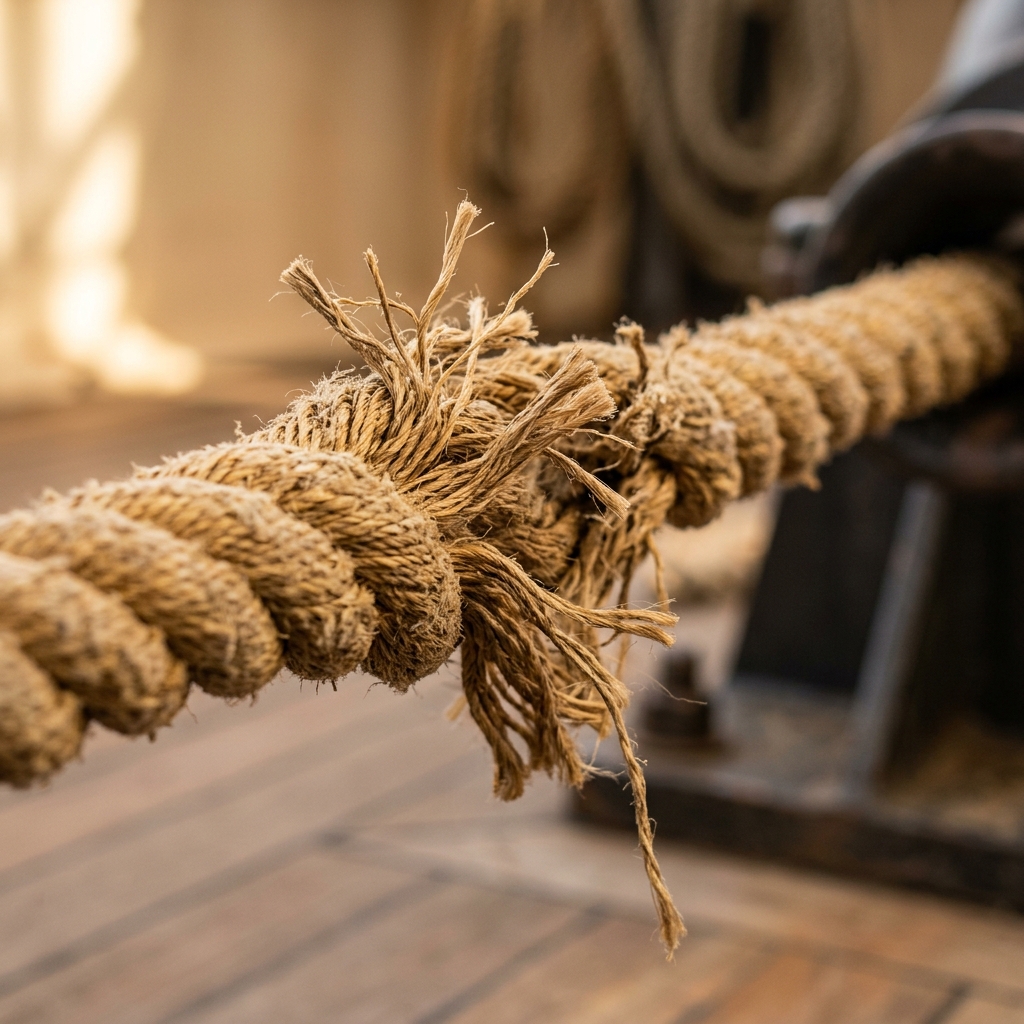
Part 1
The Old Rope
Before the transformation occurs, place both ropes — the current one and the imagined, future one — side by side, and begin by naming them. These are the patterns that no longer serve you.
What thoughts and beliefs keep you stuck?
What behaviours repeatedly pull you back?
Where do you feel most resistant, avoidant, or fearful?
What emotional reactions hold you in place? What identities or stories are past their expiry date? Write the strands of your Old Rope, adding your own prompts as they emerge.

Part 1
The New Rope
These are the patterns you want to reinforce.
What new beliefs align with the life you want?
What behaviours belong to your future self?
What emotional responses would support the retirement you want to build?
What values feel truer for who you are becoming? What new identity feels possible? Write the strands of your New Rope.
Part 2 — The Fraying Scale
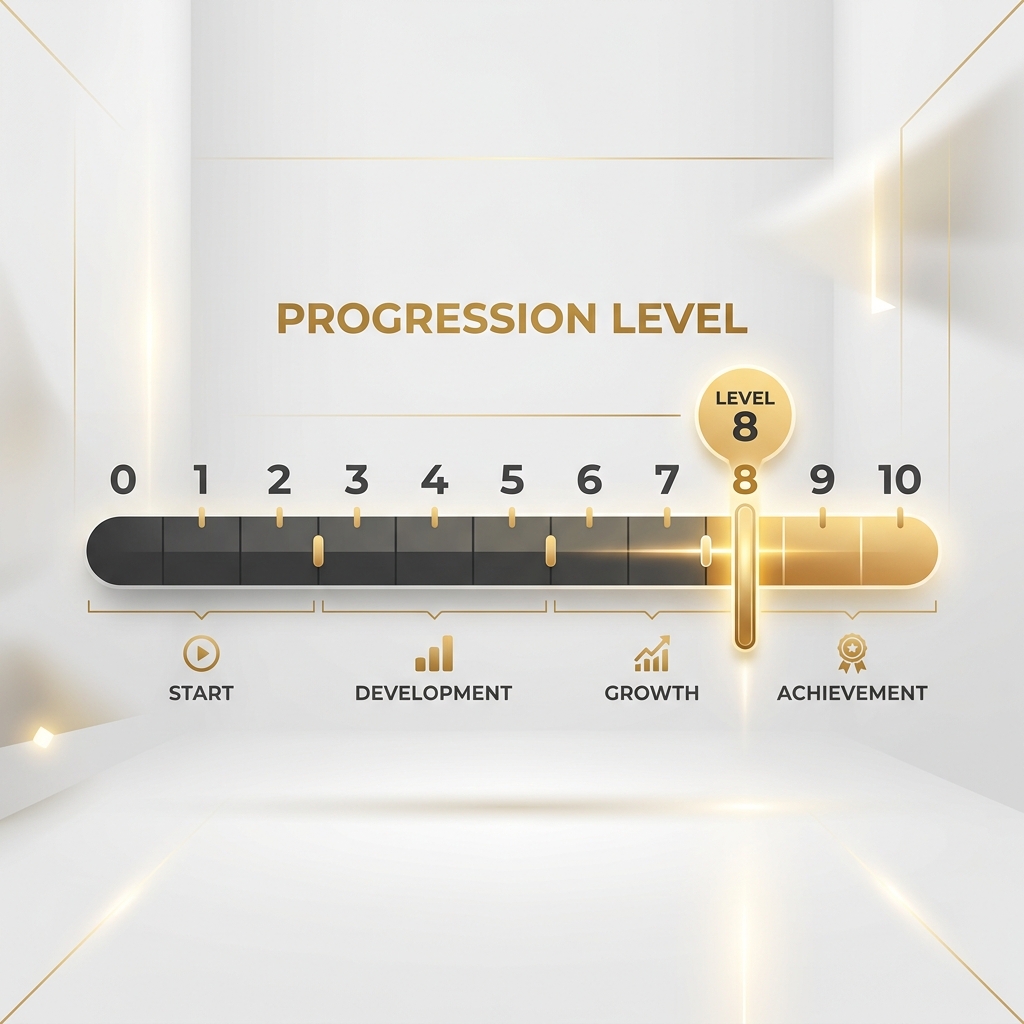
Old patterns don’t disappear overnight, but it can be helpful to assess where you currently are using scaling.
0 — Rope fully intact: the old pattern feels strong, familiar, and automatic.
1–3 — Early fraying: you notice small cracks, such as hesitation, doubt, or brief changes.
4–6 — Visible fraying: the pattern weakens under pressure. You can interrupt it more easily.
7–8 — Splitting: you see two pathways available: the old and the new. You can choose, even if inconsistently.
9 — Breaking point: the pattern no longer holds the same power, meaning a significant change is close.
10 — Rope snapped: you no longer identify with the old pattern and a new pathway has taken over.
Where is your Old Rope today (0–10)? Where is your New Rope today (0–10)?
”Transformation happens strand by strand.”
Part 3 — Strand Replacement Method
Transformation happens strand by strand. Work through each step below.
Step A — Identify one strand of the Old Rope. Example: “I avoid difficult conversations.” Example: “I tell myself I’ll fail.”
Step B — Identify the new strand that replaces it. Example: “I raise issues early.” Example: “I recognise effort before outcome.”
Step C — Define one reinforcing action. Example: “Have one honest conversation this week.” Example: “Practise a compassionate self-statement daily.”
Step D — Track signs of fraying. Did the old pattern hesitate? Did you pause before reacting? Did you choose differently, even once?
These micro-changes weaken the Old Rope, which means they matter.

Part 4
Rope Check-In Routine
Answer the questions below on a weekly or twice-weekly basis to reinforce growth.
Where is my Old Rope today? Are signs of fraying increasing or decreasing?
What strand of the New Rope strengthened this week? Which choices or behaviours felt aligned with your future?
What is my next reinforcing action? One step only. Simple equals sustainable.
This keeps your transformation in motion.

Let Your Emotions Guide You
Your Emotional Self travels ahead of you to the likely outcome of your current path.
Old Rope Weakening
- arrow_forwardLighter mood
- arrow_forwardRelief
- arrow_forwardCuriosity
- arrow_forwardBursts of motivation
New Rope Strengthening
- arrow_forwardSteadiness
- arrow_forwardA sense of ‘rightness’
- arrow_forwardMoments of pride or hope
- arrow_forwardReduced inner conflict
Remember
- arrow_forwardEmotions are messages containing vital information about your progress toward thriving in retirement.

Part 6
Connecting the Rope to Your Journey and Destination
The Old Rope anchors you to the past, the New Rope pulls you along your journey toward your chosen destination.
How does strengthening the New Rope move you closer to who you want to be?
What part of your desired future becomes easier to reach as the New Rope forms?
Which parts of your Old Rope directly conflict with your chosen destination?
Linking your rope work to the other concepts and activities in this module can help keep your journey of transformation on track toward your destination of transformation.

When the Rope Snaps
This is the moment the old pattern loses its hold. What beliefs or habits no longer feel true? What has become easier, lighter, or more natural?
What are you no longer willing to tolerate? What choices now feel available that didn’t before? What does life feel like with the New Rope taking over?
Snapping moments mark irreversible progress.
”This is your chance to notice the deeper patterns behind what is weakening, what is strengthening, and what this means for the retirement you’re building.”
What Did You Discover?
Take a moment to review what your Ship’s Rope activity revealed about your transformation so far.
Your Old Rope
What aspects of your old identity, behaviours, or perspectives showed signs of fraying?
Which strands are holding on most tightly?
Did anything surprise you about what still feels strong, or what is already starting to give way?
Where have you been investing effort without realising it?
”Which new strands appeared most clearly?”
Your New Rope
Reflect on the emerging patterns that are beginning to take shape.
Which new strands appeared most clearly? New habits, new choices?
Did the new rope feel tentative or already forming with some strength?
Which parts of your emerging self felt most natural or energising?
Where did you notice momentum building?
”How did the activity clarify the stages of your transformation?”
Your Transformation Process
Reflect on the factors that are driving or slowing your transformation.
What helped the fraying process? Insight, repetition, new behaviour, support?
What seemed to slow the formation of the new rope?
How did the activity clarify the stages of your transformation? Early, mid-way, or nearing a breakthrough?

What Did You Discover?
Implications for Your Retirement
What becomes possible as the new rope strengthens?
What becomes less necessary as the old rope loses its grip?
Which next steps now feel obvious or overdue?
Your responses highlight where transformation is already underway and where additional work is required.

Continue Your Progress
Forcing breakthroughs can be tempting, but there is no need to do so.
All that is required is recognising the strands that are changing and continuing the progress that supports your future.
Transformation
Real Stories
of Change
Case Studies – The Ship’s Rope in Action
The following case studies show how real people used The Ship’s Rope to understand, track, and accelerate their retirement transformation.
As you read, notice which elements resonate with your own experience and what they might reveal about where your transformation currently stands.
Each story illustrates a different starting point — a different old rope — and a different destination. What they share is the same underlying process: fraying, weakening, snapping, and rebuilding, strand by strand.
anchor
Ship’s Rope Case Study
Eleanor
Case Study 1 – Eleanor: Moving Beyond a Lifetime of Being “The Organiser”
Eleanor spent her entire career as a university registrar, the person responsible for ensuring that things ran smoothly. Her old rope was made of control, and being the one who always knew what to do. Retirement didn’t slow this down, as she continued organising everything around her, from family events to local committees, leaving her mental and physical resources running seriously low.
During the Ship’s Rope activity, Eleanor noticed the fraying begin when, much to her own surprise, she declined an invitation to chair yet another committee. That one “no” revealed strands of a new rope forming around spontaneity and letting others take the lead. She began experimenting, dropping her colour-coded calendar, and even taking last-minute trips abroad. Unheard of.
”Her new rope strengthened around a surprising realisation: she could still be competent and capable without being responsible for everything.”

Ship’s Rope Case Study
Sam & Priya
Case Study 2 – Sam & Priya: Reinventing Shared Space in Retirement
Sam and Priya had always imagined retirement as a shared chapter, but once it arrived, they found themselves competing for the same spaces — literally. Sam treated the dining table as his DIY headquarters; Priya wanted it for painting. Their old rope was built from implicit assumptions about how retirement “ought” to work for both of them.
Their Ship’s Rope activity revealed the fraying when they admitted how irritated and hemmed in they had both felt. The new rope formed around a more intentional approach to shared space. Sam converted the shed into a workshop, and Priya reclaimed a corner of the spare room as her studio. The dining room reverted to its original use.
”Their everyday life became easier, not because they transformed their relationship, which was strong, but because they transformed the environment in which it played out.”

Ship’s Rope Case Study
Helen
Case Study 3 – Helen: Breaking the Rope of Perfectionism
Helen spent her working life as a forensic accountant, where precision was part of the job. Without fully appreciating it, she carried this perfectionism into retirement. Her old rope was woven from rigid standards and the belief that anything worth doing had to be done flawlessly. Retirement tasks that should have been enjoyable, such as planning holidays and starting a pottery class, became exhausting projects.
During the Ship’s Rope activity, the fraying began with small signs of rebellion against her own rules: deliberately leaving a cupboard slightly messy, submitting a poem to a local writing group without editing it ten times, and allowing a half-finished painting to remain imperfect.
”Each act created another strand of her new rope, one built from experimentation, flexibility, and, yes, kindness. Over time, Helen’s new identity took shape: someone who enjoys life without demanding perfection from herself.”

Ship’s Rope Case Study
Marcus
Case Study 4 – Marcus: Letting Go of Expectations and Following His Own Path
Marcus retired from the fire service and stepped straight into volunteering, largely because others expected him to stay involved in community work. His old rope was woven from duty, obligation, and saying yes to every request. The Ship’s Rope activity showed him how tightly those expectations were holding him in place and how little joy the work now gave him.
As the rope began to fray, Marcus noticed a different set of strands forming: a long-held dream of travelling and documenting his journeys through writing and photography. His new rope grew stronger each time he planned a trip, wrote a short post, or shared a story online.
”Over time, volunteering shifted from being something he felt compelled to do to something he chose occasionally, on his own terms. Travel and blogging became the core of his new identity, replacing the weight of others’ expectations with a life that finally felt like his.”

Ship’s Rope Case Study
Ruth
Case Study 5 – Ruth: Letting the World In
As a materials scientist, Ruth spent her working life running experiments in controlled environments. She was never happier than when meticulously observing and recording her surroundings. After retiring, she continued to live as if the world still needed calibration. She weighed raspberries before freezing them. She kept a weather log for her garden. She organised her books like a branch of Waterstones. None of it was stressful, or was it?
During the Ship’s Rope activity, the first fray appeared in an unexpected place. She was halfway to the local shop when she realised she’d forgotten her notebook. She nearly turned back, then didn’t. The sky didn’t fall in. She bought what she needed, chatted to someone, and walked home without documenting a single thing.
”Nothing dramatic changed, yet everything did. The new rope symbolised letting the world come to her rather than trying to pre-empt it. The old rope of control loosened, replaced by one of openness.”

Keep Going
Transformation sometimes feels dramatic while it’s happening, and sometimes a slow weakening of what worked before and the strengthening of what does now.
Every frayed strand is progress. Every new strand is evidence of who you’re becoming. Every step you take adds weight to the new rope you’re building.
You don’t need to feel transformed to be transforming. Trust that your mind/body system is already doing the work in the background.